
You are not your trauma: Lessons from a rescue dog
I’ve learned a lot about dealing with trauma through my dog.
Yes, really!
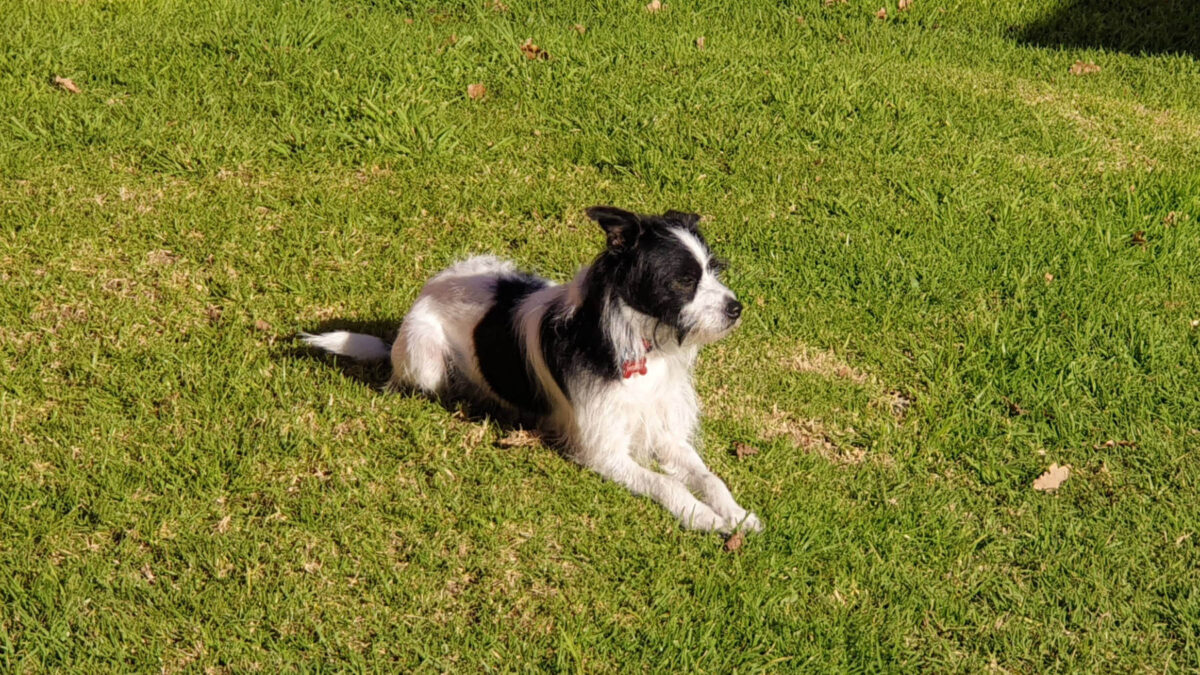
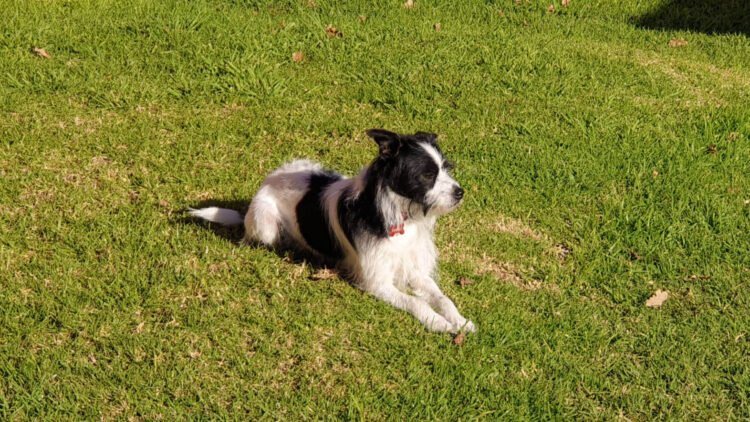
He’s a rescue, and he’s obviously had some bad experiences in his first 11 months of life that taught him the world isn’t safe.
But he’s also like a simplified model of what it’s like to live with trauma, and how to work through the issues that it creates and begin healing.
Here’s what I’ve learned from him…
#1 – A nervous system that’s on high alert
Toby jumps at the slightest noise. Sometimes he even startles when there’s TRULY nothing there.
When we’re out on our walks, he’ll often run sideways into my legs because he thought he saw something (and is trying to run away).
And maybe he did.
But his nervous system is CONSTANTLY on high alert, seeing danger everywhere.
He’s a heartbeat away from freaking out.
As we all are, when we’re healing from trauma.
And I’ve found that it’s a balancing act.
I have to walk a very fine line between intentionally exposing him to sounds and activity that may trigger him, and also being conscious not to unthinkingly do the things that he hates.
On the one hand, I need to gradually teach him that these noises and experiences are safe, and he has nothing to fear.
And on the other, I have to very carefully manage his activation level, so he doesn’t get overwhelmed and panic, making him shut down or freak out, simply adding to his issues.
It’s a very fine line sometimes, and I don’t always get it right – with me or with him!
Over the years, I’ve learned that I too need to gently and gradually expose myself to the things that would normally trigger me, and see if I can handle it.
Sometimes it works, and sometimes it doesn’t.
But so long as I build up enough experiences of feeling safe, even if it’s in the tiniest ways, my system starts to relax.
If we can just keep chipping away at those reactions in the right way, our nervous systems can calm down and allow more things in (without the freak out).
#2 – Craving connection
Toby is also terrified of being abandoned.
The moment we’re out of sight, he’ll start yipping loudly, even if we’re just around the corner.
Sometimes, he’ll melt down when one of the kids leaves, even if the rest of us are still right there with him.
He desperately needs to know where his people are at all times.
He’s definitely getting better with this one, but we’re nowhere near being able to leave him at home alone.
I’m practising warning him every time I’m about to go off and do something, and letting him know how soon I’ll be back.
Sure, he might not understand the words, but I need him to learn to trust that I will come back.
So over and over, I go out of sight to do something, and then reassure him on my return that I did as I promised.
And it’s working, very gradually.
He’s now able to be looked after by either of my two kids while my husband and I go out to do the shopping without having a melt-down.
And he also craves connection with people, but he’s only able to handle it with those he’s very familiar with.
Anyone new is simply too terrifying, and he’ll often pee in fear, even while simultaneously trying to engage.
Even though my daughter’s boyfriend spends half his time at our house, Toby will still sometimes make a mess in the midst of being patted by him.
But again, by repeated gentle exposure to new people, and people coming and going, he’s learning to take more risks.
The other day, while at the shops, he licked some random person’s leg on the way past.
Although that’s not something I would normally encourage, it’s still a huge step for him.
And when we come from trauma, we’re also very anxious about our connection with others.
Whether that’s fear of abandonment, or avoidance or social anxiety, we struggle to relax into our bonds with others.
We’re never quite sure if they’ll be nice or mean to us, or disappear suddenly, or reject us just for being ourselves.
We’re standing on very shaky ground – of our own making – when it comes to the people in our life.
But slow and steady practice within safe relationships builds that trust, over time.
The more we have positive, safe interactions, the more our systems can have faith in people.
#3 – Food is powerful
Toby is VERY food-motivated (as am I), but it’s also an indication of how he’s doing.
When we first got him, he lost almost 5% of his body weight in the first week, simply because he wouldn’t eat.
He was so stressed about all of the huge changes going on in his life that he couldn’t stomach food, literally.
And many times in the first few weeks, he would eat something with enthusiasm, and then shortly afterwards bring it back up.
Even now, he has a reasonably sensitive digestive system, and I have to be quite careful with what I feed him and how much.
And food is also hugely comforting to him.
He waits (not so patiently) for his feeding times each day, and I’m sure he would eat twice as much as I give him if he could (he’d be a very pudgy dog!)
One of his evening treats is a mashed banana with a small amount of nut butter, and he loves this one so much, that as I make it each day, he begins salivating.
By the time I give it to him, he ends up drooling all over the floor – and he’s not your typical dribbly kind of dog at all!
Now that he’s more settled in, he happily eats his food every day and he’s even gained all the weight back.
But food is such an important part of our experience as well – we eat very regularly, we likely have strong positive and negative associations with food, and our guts store so many emotions.
So we do need to be conscious about what we put into our bodies, and give our systems the nutrients they need to heal, process what’s going on and cope emotionally.
I know when I’m dealing with strong emotions, my first instinct is to eat, even though it’s not usually what I really need.
It’s comforting and distracting, but it can also upset us just as easily.
I’ve spent years now, practising listening to my body’s signals about what it really wants, and trying to nurture it so it has the resources to heal.
After all, our bodies have an innate sense of what’s best for us and how to heal – we just have to listen.
So when we’re coming from trauma, we need to look closely at our relationship with food, because it can teach us a lot about ourselves.
#4 – He is not his trauma
Under all the anxiety and sensitivity, Toby is an incredibly upbeat, happy-natured dog.
He’ll take any chance he can get for a game, whether that’s playing “keep off” with his rope, or running after his fluffy chew toy.
And he’s also very capable of entertaining himself.
We’ve watched him happily play with a toy by himself, throwing it around, chasing it and generally having a ball without any assistance from us.
He loves his pats and cuddles and he’s always so excited to see everyone anew each day (or any time they go away and come back again).
This made me realise, so clearly, that he is NOT his trauma.
Whatever experiences he’s had, whatever negative associations he’s learned, this is not who he truly is.
Under all of that is a happy, loving, trusting dog just trying to express himself.
And I realise that’s true of us as well.
We are not defined by our trauma, and that’s one of the reasons I struggle to even describe myself as having trauma – I don’t want to be defined by it.
So whether we’re dealing with emotional flashbacks, or numbing out or perfectionism or a vicious inner critic, it’s important to remember that this is not who we are.
We are so much more than our experiences.
We are so much more than our issues.
And as we start to peel back the layers, and heal our “stuff”, then we get to express the amazing fullness of who we really are.
Never lose sight of the true you underneath all of this baggage.
They’re worth fighting for.
#5 – Healing through new experiences
As I’ve discovered through working with Toby, the most effective way to help him heal is to shower him with new, positive experiences, in small doses.
I can’t talk him out of his reactions – they’re not logical or rational (and he’s doesn’t speak “human”).
I can’t punish him out of his anxiety – he’s not doing it to be difficult.
I can’t force him to “get over” his issues by metaphorically dumping him in the deep end – his nervous system can’t handle that.
And all of that applies to you too.
When we first got him, Toby would cower at even the most basic of commands – sit, come, stay.
Do you know how heart-breaking it is to watch a dog cower when you call them to you?
Initially I tried using different commands, but he still shrank away at the action, even with a different name.
So I gave in and simply used constant, positive reinforcement to counter the past traumatic experiences, a little at a time.
Lots of showing him that he’s safe when I ask him to sit, or come or stay.
Lots of backing off when I can see he’s had too much.
Lots of positive words and reassurance and cuddles.
He WANTS to obey, he’s just also dealing with a ton of fear.
And I get how hard that can be.
Several months on, and he’s great at sitting, pretty good at coming when called and still struggles a bit with “stay”.
And this same approach is how we can slowly work through our issues as well.
Sure, we can go to energy healers and use techniques to release our issues, and they can really help to get things moving.
But we also just need to pile up lots of tiny, new experiences that feel safe.
To surround ourselves with safe people and places and moments.
To give ourselves tons of encouragement, and praise and love.
We just have to be patient.
We have to recognise that we’ll still “mess up”, that there’ll be days when we can’t handle as much, that we have to be patient with ourselves.
But over time, building up that repository of positive experiences will change our view of the world, almost without us realising it.
And one day, we’ll wake up and realise just how far we’ve come.
That we’re no longer as overwhelmed or dysregulated as we used to be.
That we can handle so much more.
That we’re so much happier.
And we can thank Toby for showing us the way.
A quick recap
- A traumatised dog is a helpful, simplified model for healing from trauma
- Our nervous systems are often looking for danger everywhere
- We need to balance exposure and regulation
- We crave connection while also fearing it
- We need to give ourselves constant reassurance, and build trust
- Food is entangled with our sense of safety and emotions
- We need to examine our relationship with food, and make sure it’s healthy
- We are NOT our trauma, it’s a just a layer of muck over the top
- There’s an amazing person underneath our issues, and they’re worth it all
- The most effective strategy is repeated, small, positive experiences
What next?
- Does seeing trauma through the experiences of a dog help to clarify what’s going on for you?
- Is your nervous system on high alert, startling at the slightest provocation? Can you find the right balance between exposing yourself to those things, and remaining regulated?
- Do you struggle with connection, wanting it but also not wanting it? Does it cause anxiety? Can you find safe people in your life to practice having safe experiences with?
- Do you have a dysfunctional relationship with food? Can you see how food is connected to your emotions? Do you need to take better care of your body in order to be able to cope and heal?
- Have you had glimpses of yourself, the true you, underneath all of your baggage? Can you see the person you’re trying to become? Use that to motivate yourself to keep going, especially when the going gets hard.
- How can give yourself small, positive experiences today and every day? What things can you do to increase how often you feel safe? Are you being patient enough with your progress?
I hope you learned something from Toby’s experiences.
Seeing trauma through his struggles has really helped to show me the primary challenges we deal with when we come from trauma AND what we need to give ourselves in order to be able to heal.
If you’re ready to give yourself more positive experiences, download my guides on self-care and grounding, and strengthen your sense of safety.
Do you have a pet you can go and pat?
I’m sure they’d appreciate it!
And may you have a day filled with many small, positive experiences.
Love,
Nicola